1.2316 Mould Steel: Corrosion Resistance & Industrial Applications
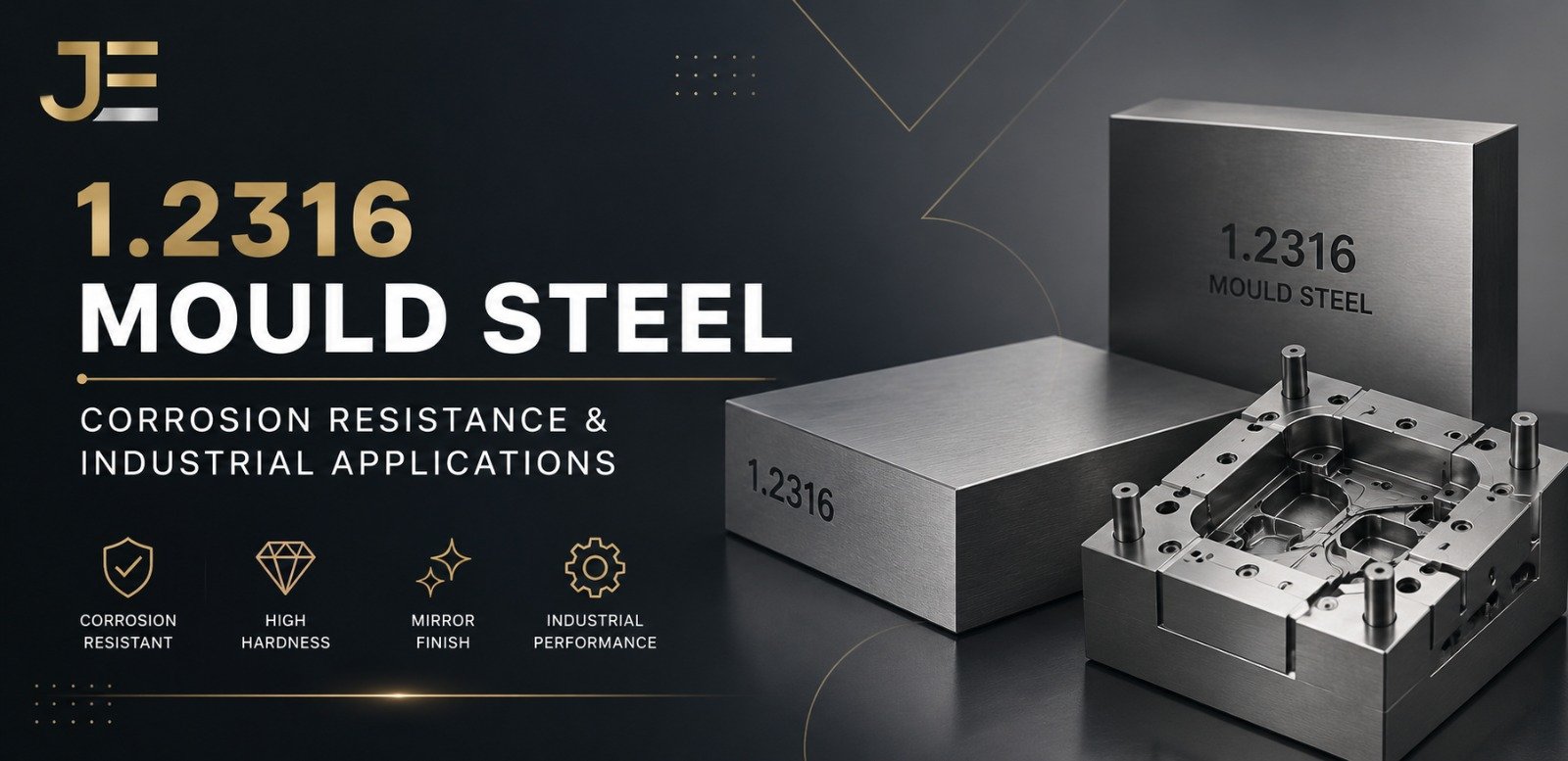
By Jini Enterprise | jinienterprise.in | Premium Stainless Mould Steel Supplier
If you are searching for a high-performance stainless mould steel that combines exceptional corrosion resistance with superior hardness and machinability, then 1.2316 mould steel is your ultimate answer. Widely used across the plastics, food processing, and chemical industries, 1.2316 mould steel has become the go-to choice for engineers and manufacturers who demand reliability in every single mould they produce.
At Jini Enterprise, we supply premium-grade 1.2316 mould steel to industries across India. In this comprehensive guide, we will walk you through everything you need to know — from chemical composition and mechanical properties to industrial applications, heat treatment, and why 1.2316 stands apart from other plastic mould steel grades.
What is 1.2316 Mould Steel?
1.2316 mould steel is a high-alloy, chromium-rich stainless mould steel that belongs to the martensitic stainless steel family. It is specially designed for use in plastic injection moulds, dies, and tooling applications where resistance to corrosion and chemical attack is critical.
Also known by trade names such as Stavax ESR equivalent or plastic mould steel Grade 316, this material is pre-hardened to approximately 29-33 HRC, making it ready-to-use for most mould making applications without requiring additional heat treatment.
- DIN designation: 1.2316
- AISI/SAE equivalent: Modified 316 / Martensitic Stainless
- Pre-hardness: 29-33 HRC (delivery condition)
- Hardness after full heat treatment: up to 52 HRC
- Surface finish capability: Mirror-polishable
Chemical Composition of 1.2316 Mould Steel
| Element | Symbol | Percentage (%) | Role |
|---|---|---|---|
| Carbon | C | 0.33 – 0.45% | Hardness & Strength |
| Chromium | Cr | 15.0 – 17.0% | Corrosion Resistance |
| Molybdenum | Mo | 0.80 – 1.30% | Pitting Resistance |
| Manganese | Mn | ≤ 1.00% | Hardenability |
| Silicon | Si | ≤ 1.00% | Deoxidizer |
| Phosphorus | P | ≤ 0.030% | Controlled Impurity |
| Sulfur | S | ≤ 0.030% | Machinability |
The high chromium content (15-17%) gives 1.2316 its classification as a stainless mould steel — highly resistant to rust, moisture, and chemical attack — a property that ordinary plastic mould steel grades simply cannot match.
Mechanical Properties of 1.2316 Mould Steel
| Property | Value |
|---|---|
| Hardness (Pre-hardened) | 29 – 33 HRC |
| Hardness (After Hardening) | Up to 52 HRC |
| Tensile Strength | ~1000 – 1100 MPa |
| Yield Strength | ~900 MPa |
| Elongation | ~12 – 15% |
| Thermal Conductivity | ~20 W/m·K |
| Density | 7.75 g/cm³ |
Why 1.2316 Mould Steel Excels in Corrosion Resistance
With 15-17% chromium, 1.2316 naturally forms a self-repairing chromium oxide passive layer. Even in humid conditions, it resists rust. The molybdenum addition improves pitting resistance — crucial for PVC and chlorinated plastics. Unlike standard P20 or 718, it requires no chrome plating, saving maintenance costs.
Industrial Applications of 1.2316 Mould Steel
- Plastic Injection Moulding: PVC, flame-retardant plastics, glass-fiber reinforced, transparent optical parts.
- Food Industry Tooling: Food packaging, dairy containers, kitchen utensil moulds.
- Medical Device Manufacturing: Surgical instruments, medical packaging, tooling that withstands sterilization.
- Chemical Industry: Valve components, pump parts, chemical handling equipment.
- Optical & Electronics: Lens moulds, light guide plates, precision housings.
- Cosmetics Packaging: High-gloss luxury packaging moulds.
Heat Treatment of 1.2316 Mould Steel
Annealing: 750–800°C, furnace cool. Hardening: 1000–1050°C, oil/air quench → 50–52 HRC. Tempering: 200–250°C for max hardness or 450–500°C for better toughness. Avoid 400-430°C range. Optional nitriding yields surface hardness 900-1100 HV.
1.2316 vs Other Mould Steel Grades: Comparison
| Property | 1.2316 | P20 / 718 | 1.2738 | H13 |
|---|---|---|---|---|
| Corrosion Resistance | Excellent ✓ | Poor ✗ | Good | Moderate |
| Pre-hardness | 29-33 HRC | 28-34 HRC | 28-34 HRC | Annealed |
| Max Hardness | 52 HRC | 40 HRC | 40 HRC | 54 HRC |
| Polishability | Mirror Grade | Good | Good | Excellent |
| PVC Suitability | Yes ✓ | No ✗ | Limited | No ✗ |
| Food Grade | Yes ✓ | No ✗ | No ✗ | No ✗ |
Machining & Working Tips
Use carbide tools with TiN/TiAlN coating, adequate cutting fluid, low cutting speeds with high feed rates. EDM is suitable. De-stress after rough machining, and progressive polishing up to diamond paste for mirror finish.
Why Choose Jini Enterprise?
We deliver premium 1.2316 mould steel with MTC, full traceability, plates/blocks/rounds, and cutting services. Competitive pricing, fast delivery, and expert technical support across India. ISO-certified supply chain ensures consistent composition.
Frequently Asked Questions (FAQs)
Difference between 1.2316 and 1.2085?
1.2316 has higher carbon, better hardness after treatment, superior polishability. Excellent for PVC and aggressive plastics.
Can 1.2316 be welded?
Yes — TIG/laser welding with preheat 200-300°C and post-weld stress relieving recommended.
Is it mirror-polishable?
Absolutely. Achievable Ra < 0.05 μm, ideal for optical and transparent part moulds.
Conclusion
1.2316 mould steel is the definitive choice for corrosion resistance, high hardness, and long mould life. Whether it's PVC moulding, food-grade components or medical devices, this stainless mould steel outperforms conventional grades. Jini Enterprise offers premium quality with certifications and technical support. Contact us today for a quote.
Jini Enterprise — Your Trusted Supplier of 1.2316 Mould Steel, Stainless Mould Steel & Plastic Mould Steel in India | www.jinienterprise.in